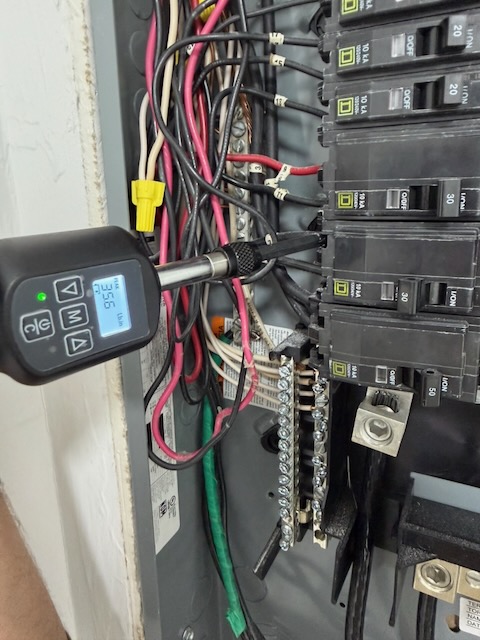
Why “Hand-Tight” Isn’t Enough: The Critical Importance of Torquing Electrical Panel Connections
We’ve all done it—tightened a screw until it felt “good enough” and moved on. While that might work for a piece of flat-pack furniture, relying on muscle memory inside your main electrical panel is a recipe for disaster.
Properly tightening, or torquing, your electrical connections to exact manufacturer specifications is one of the most overlooked safety steps in electrical work. If you guess, you gamble with the safety of your entire property.
Here is exactly why proper torque matters, and why your standard screwdriver isn’t cutting it.
The Real Risks of a Loose Connection
Electricity needs a clean, highly secure path to travel safely. When a wire is loose in its terminal, it creates a cascade of hidden problems:
- Electrical Arcing: A loose wire leaves a tiny gap. Electricity will physically jump across that gap, creating micro-sparks (arcing) that can reach thousands of degrees.
- The Resistance Trap: Poor contact creates immediate electrical resistance. Resistance generates heat. Over time, this heat melts wire insulation, destroys plastic components, and triggers electrical fires.
- Thermal Cycling: Wires naturally heat up when under load and cool down when electricity stops flowing. This constant expansion and contraction gradually backs loose screws out even further, making a bad situation worse.
The Danger of Over-Tightening
Many people think the solution is simple: just crank down on the screw as hard as you can. Unfortunately, over-tightening is just as dangerous as leaving a connection loose.
If you apply too much force, you risk crushing the copper wire, which structurally weakens it and reduces its current-carrying capacity. You can also easily strip the screw threads or literally crack the plastic casing of a brand-new breaker, ruining the equipment before it even turns on.
Human Hands Aren’t Calibrated
The biggest reason to stop guessing is simple: humans cannot accurately feel the difference between 15 inch-pounds and 45 inch-pounds of torque.
This isn’t just an opinion; it is now a matter of safety regulations. The National Electrical Code (NEC Section 110.14(D)) explicitly mandates the use of calibrated torque tools for terminations unless the manufacturer specifies otherwise.
How to Do It Right
- Read the Label: Look at the inside door of your electrical panel or the side of the breaker. Manufacturers print the exact torque ratings (usually in inch-pounds) right there.
- Use a Torque Screwdriver: Invest in a calibrated electrical torque screwdriver or wrench. These tools click or slip the moment you hit the precise required pressure.
- Know Your Limits: Working inside a live panel carries a massive risk of electrocution. If you aren’t a licensed electrician, leave the panel door shut and call a pro who has the right tools.