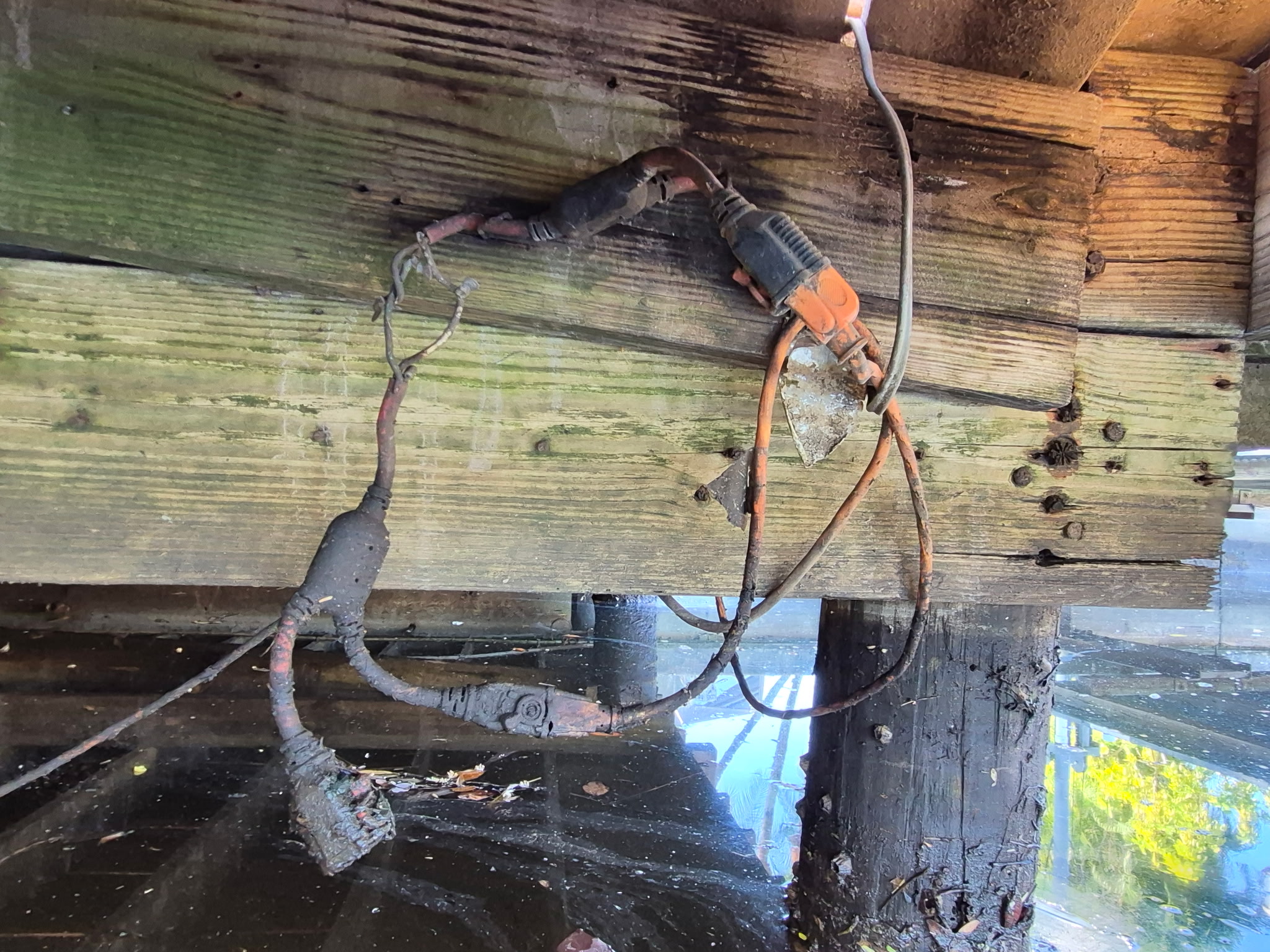
Welcome to our first installment of “What Were They Thinking?!” In this series of blogs I will tell you about the sometimes comical and some time dangerous things we come across as service electricians in Southwest Florida that make us scratch ours heads and ask “what were they thinking?”. The intent is to entertain but also educate you about electrical safety and why it’s important, and why sometimes it’s absolutely necessary to call in a professional. And I’ll always include an actual photo for your viewing pleasure.
This week we got a service call for a boat lift that was immediately tripping the circuit breaker whenever in use. Let me start by this is a very common occurrence. Electrical components outside will typically fail at some point. Mother Nature always wins. Although a tripping circuit breaker can be a nuisance, seek comfort in knowing that the circuit breaker, as longs as it’s not defective, is doings its job in keeping you safe. An instantaneous tripping circuit breaker is most likely indicating that there is a short. So after speaking with the costumer, we start troubleshooting and investigating the situation. Now here comes the head scratcher. Upon looking around the boat dock we come across a bunch of electrical work that we call ” home-owner specials”, or “landlord specials”. “What are those things?”, you ask. They are repairs or installations that usually requires a professional, but a homeowners or landlord took it upon themselves to try complete it on their own. I get it! I can look around my own home and see the less-then professional installs I’ve done myself to save some money. But even these home-owner specials that we found at this book dock will have you shaking your head in disbelief. We found electrical splices just buried in the dirt. We found extension cords buried in the dirt serving as supply power to some of these boat lift motors. We found “dirty” splices ( splices not in an electrical junction box) underneath the dock that was surely under water durning high tide. We found light poles completely rusted through and being held in place by a wing and a prayer. When we come across these scenarios, any reputable electrician has an obligation to bring these safety concerns to the customer. Could we’ve made a quick repair and got the boat lift working for the customer before my morning coffee even had a chance to cool? Yes, but we wouldn’t be able to sleep at night knowing we left this customer with a potentially dangerous situation. We brought these safety concerns to the customer, and offered a solution to bring these things up to code. We put the power supply runs in conduit. We abandoned any buried extensions cords. We properly mounted supports and electrical components. We installed a new drum switch for the customer for their boat life, and lastly we made sure everything was GFI protected. It was immediately obvious that electrical work was done by a homeowner at some point. Thank goodness no one was injured by some of there dangerous scenarios we came across, and thank goodness the current home owners called in professionals when they did.
When we’re talking about circuits that feed outdoor receptacles. It is important that they are GFI protected. Like I mentioned before, Mother Nature always wins. That means even though some electrical components may be rated for outdoor use, gaskets will eventually fail, plastics will become brittle and crack, and rust will develop on most metals. Electrical wires should always be in UL listed conduits, or be UL listed for direct buried applications. Electrical splices should always be in an approved electrical junction box. When you call Good Vibrations Electric, we will always bring to your attention any unsafe conditions, and we will take the time to explain why it needs to be addressed, and possible solutions. If your current electrician doesn’t do this, and just hands you an astronomical invoice at the end with very little to no explanation. It may be time to find a new electrician.